Speaking to a smartphone to dictate a message, asking an assistant to turn on the lights, using voice to search for something on the web has become normal in just a few years. Behind this feeling of naturalness lies
speech recognition, a set of artificial intelligence techniques that transform sound waves into text and commands understandable by machines.
What is speech recognition today
Speech recognition refers to the process by which a computer system transcribes or interprets spoken language. In technical contexts, it is often called
ASR, Automatic Speech Recognition. The goal can be to produce an accurate transcription, extract key commands, activate specific functions, or feed into a larger dialogue system.
The definitions proposed by major players like Google, Amazon, or Microsoft converge on a common point: these systems take an audio signal as input and convert it into text using statistical models and neural networks trained on vast amounts of speech data
Google Cloud Speech to Text,
Azure Speech to Text.
From voice to digital signal
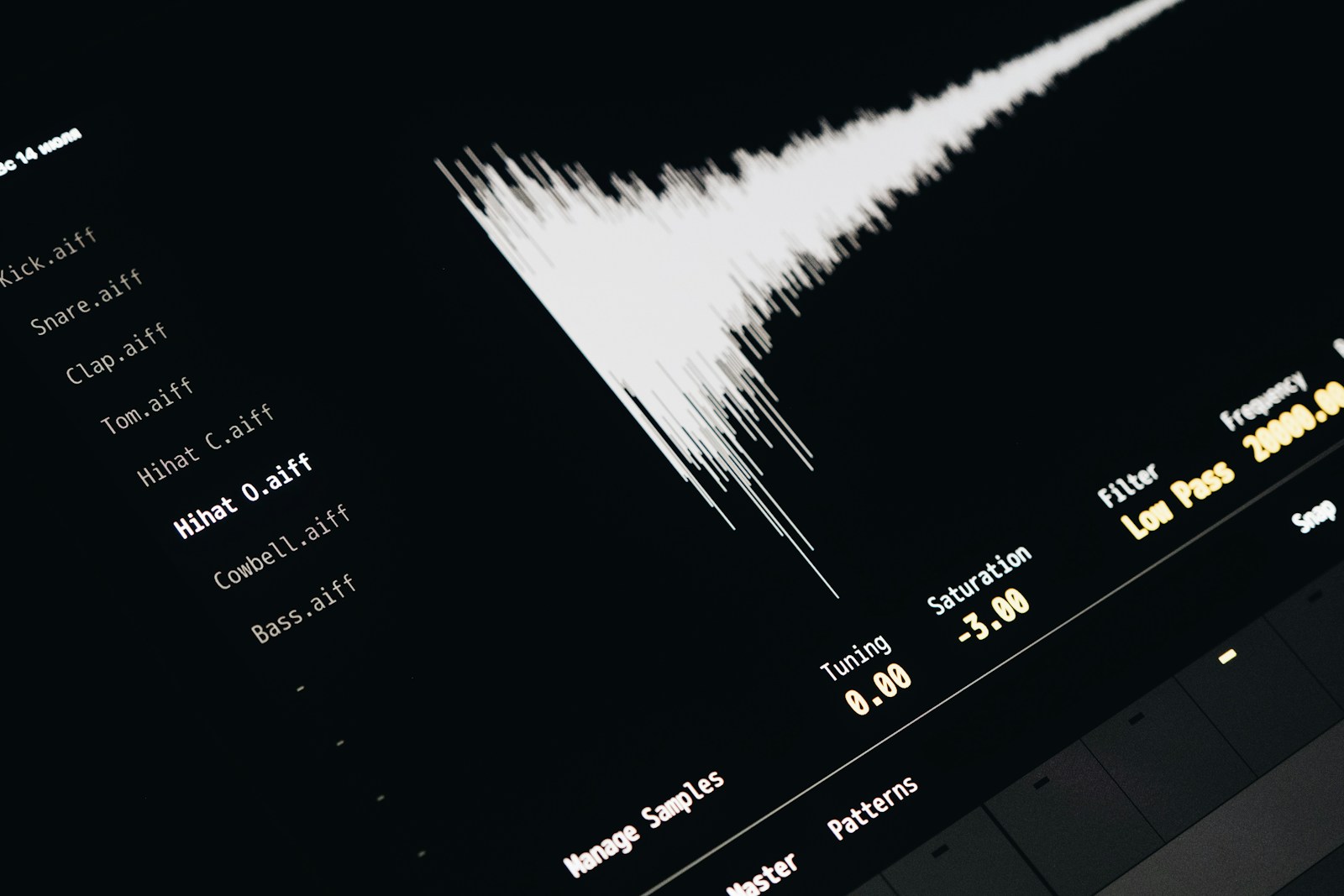
For a computer, voice is nothing but an air vibration transformed into numbers. The microphone converts sound pressure into an electrical signal, which is sampled multiple times per second and quantized into digital values. A recording at 16 kHz, for example, contains 16,000 samples per second, each represented by a certain number of bits.
The next step is
feature extraction. Instead of working on the raw signal, representations like the spectrogram or MFCC coefficients are calculated, which summarize how energy is distributed across frequencies over time. Libraries like
Torchaudio or
Librosa offer ready-made tools for this type of analysis, which has been the standard starting point for many speech recognition models for years.
Acoustic models, language models, and deep learning
Historically, speech recognition systems were composed of several distinct blocks. An
acoustic model related sounds to language units, a
language model evaluated which sequences of words were more probable in a given language, and a phonetic dictionary bridged the two worlds. Technologies like HMMs, Hidden Markov Models, were the heart of these systems for years.
In recent years,
deep learning has changed the landscape. Deep neural networks, often based on recurrent architectures or transformers adapted for audio, enable end-to-end models that learn the mapping between audio and text directly. Frameworks like
PyTorch and open-source models like those from the
Coqui STT project or
Vosk show how this new generation of systems is more accurate and flexible, especially in the presence of noise.
Ready-to-use speech recognition APIs and services
Today, you don't need to build a speech recognition engine from scratch to use it in an app. Major cloud providers offer
speech-to-text APIs that allow you to send an audio stream and receive a transcription in response. Beyond the already mentioned Google Cloud and Azure, there are services like
Amazon Transcribe and on-premise solutions based on open-source models.
These APIs handle complex details on behalf of the developer, such as multilingual models, domain adaptation, confidence scores, and speaker diarization. In many cases, they also offer subsequent analysis functions—sentiment analysis, entity extraction, or content classification—directly linking speech recognition and NLP.
Voice assistants, dictation, and everyday use cases
The most visible face of speech recognition is
digital assistants like Siri, Google Assistant, Alexa, and similar. These systems combine speech recognition, natural language understanding, and speech synthesis to offer dialogic interactions. The developer guidelines from Apple and Google show how a voice command is interpreted and transformed into intents to be passed to apps
Siri,
Google Assistant.
Alongside assistants, dictation has become a standard feature in mobile and desktop operating systems. Writing a message, taking notes, or transcribing an interview by speaking directly to the device is often faster than typing. In the corporate world—call centers, meeting tools, and support platforms—speech recognition is increasingly integrated to generate automatic minutes, analyze conversations, and improve service quality.
Why talking to machines feels natural today
The leap in quality in the perception of speech recognition has at least three causes. Modern
neural models are much more accurate than systems from a few years ago, especially in non-perfect environments. Computing power, both in data centers and on devices, allows these models to run with low latency. The microphones and noise-cancellation systems integrated into smartphones have become much more sophisticated.
The result is that, in most cases, the system truly understands what we say, with response times approaching a fluid conversation. Voice interaction stops feeling like an experiment and becomes a credible, sometimes preferable, option compared to the keyboard or touch.
Limits, bias, and privacy concerns
Despite progress, speech recognition still has obvious
limitations. Strong accents, minority languages, or highly specialized vocabularies can challenge even the most advanced systems. Furthermore, recognition quality is not uniform across all voices, with differences related to gender, age, or origin, a sign of
bias in training data.
Then there is the issue of
privacy. Many services send audio to remote servers for processing, with clear implications for how voice data is managed and stored. Some manufacturers are pushing for models that work directly on the device, reducing the need to send streams to the cloud. In any case, understanding where our recordings go, who can listen to them, and for how long they are stored is an integral part of the conscious use of these technologies.
Speech recognition as the interface of the future
Speech recognition will not replace the keyboard and mouse, but it is already one of the most important interfaces of the present. For software designers, it means considering voice not just as a gadget, but as a real channel of access to functions and services. For those working in AI, it means working on the integration between audio, natural language, and context to build richer, less rigid experiences.
In a world where we expect to be able to talk to the devices we carry in our pockets, on our desks, or in our cars, speech recognition has become part of the basic grammar of human-machine interaction. Understanding what it is, how it works, and what consequences it entails is a way to not passively endure it, but to use it more consciously and design services that meet user expectations.