When discussing
Industry 4.0, there is often a risk of falling into conference mantras. Slides full of English terms, promises of smart factories, diagrams where everything is smart. Yet, behind the label, there is a very concrete change in how companies produce, collect data, and make decisions. It is the meeting point between machines, sensors, cloud, algorithms, and people. In other words, the union between the physical and digital worlds.
Organizations like the
World Economic Forum speak of a fourth industrial revolution to describe this transition. No longer just automation, but
cyber-physical systems where every component is connected, measures, communicates, and reacts. The Industry 4.0 label has become the shorthand to indicate all of this, especially in Europe.
What Industry 4.0 Really Is
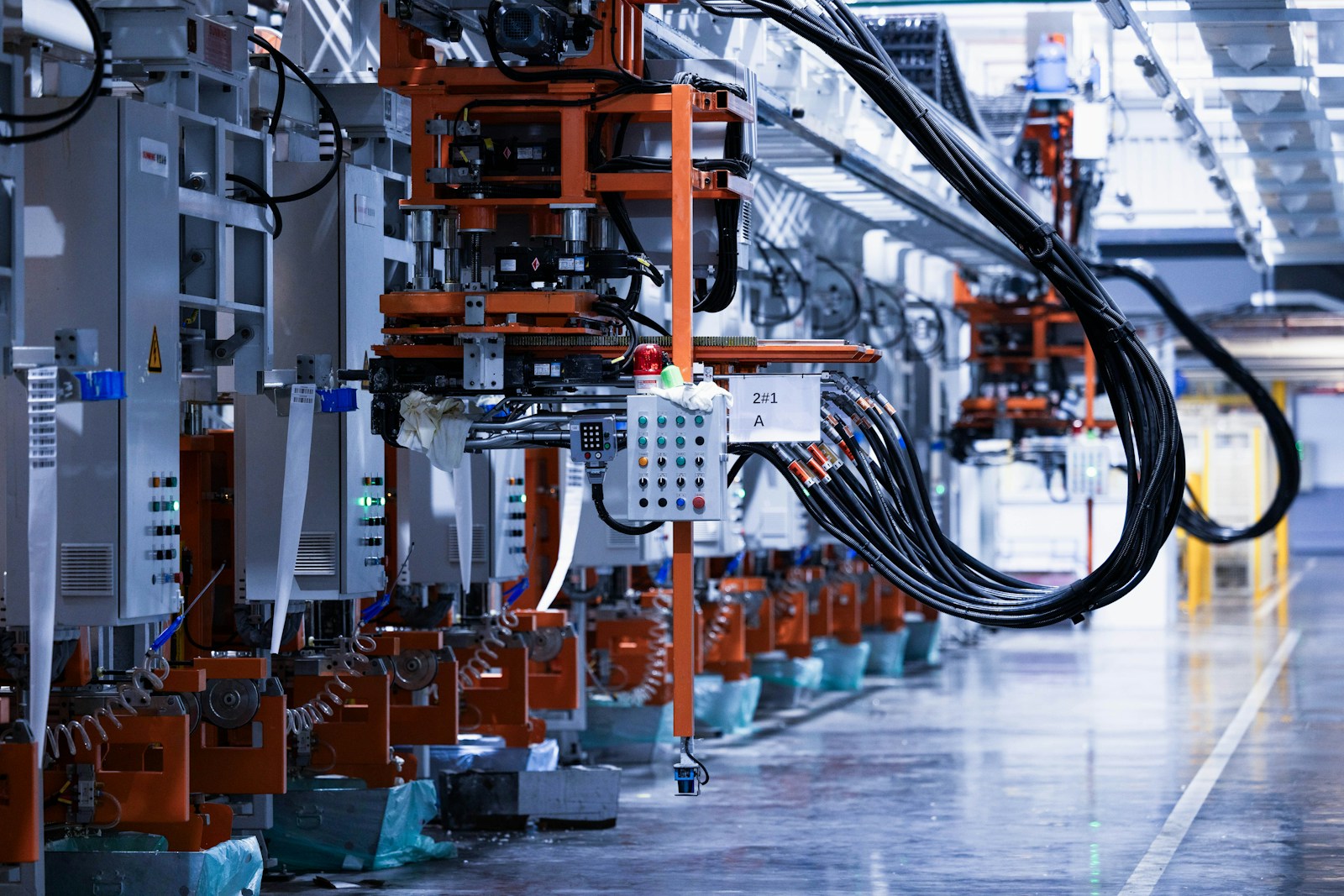
Industry 4.0 refers to a phase of industrial transformation where different technologies converge. Internet of Things, cloud, big data, artificial intelligence, collaborative robotics, augmented reality. These are not isolated novelties, but pieces of an ecosystem where the factory is no longer a closed block, but a network of connected objects that communicate with each other and with external digital platforms.
In the language of European policymakers, summarized in documents from the Parliament and Commission dedicated to the topic, Industry 4.0 is the ability to
integrate along the entire value chain advanced automation technologies and data exchange. From component suppliers to the assembly line, from the warehouse to after-sales service. Every step becomes a source of information that can be collected, analyzed, and used to improve processes and products.
The numbering is not random. First revolution, steam. Second, electricity and mass production. Third, computing and classical automation. Fourth, the convergence between digital and physical that makes possible factories where machines adapt, predict, and communicate in real time with management systems and external platforms.
How It Works with Sensors, Data, and Intelligent Systems
To understand how Industry 4.0 works, it's best to start from the lowest level. The
sensors. Every machine, every line, every product can be equipped with sensors that measure temperature, vibrations, positions, consumption, cycle times. These sensors send data to local controllers and collection systems, often gateways that speak both industrial languages and more classic network protocols.
The data is then pushed to processing platforms, on-premise or in the cloud. Here analytics, machine learning algorithms, and dashboards come into play, allowing technicians and managers to see in real time what is happening. It's not just about monitoring. The goal is to use that data to make better decisions. Plan maintenance when needed, optimize process parameters, identify bottlenecks that would escape the naked eye.
Alongside sensors and data are
intelligent machines. Collaborative robots that work alongside operators, automated handling systems that adapt to the flow, warehouses that reorganize routes based on actual orders. All elements that are part of that smart factory vision described in many European initiatives dedicated to industry digitalization.
Perhaps the most interesting part is the connection with the world outside the factory. Production data can communicate with supply chain systems, logistics platforms, even with products once they leave the plant. This is where
digital twins come in, virtual representations of machines or processes that are updated in real time and allow simulations, tests, what-if scenarios without touching the physical plant.
Why It Unites Physical and Digital, Not Just in Theory
Industry 4.0 is often described as something abstract, but its strength lies precisely in bringing together what until recently was separate. On one side, the physical world of machines, plants, parts coming off a line. On the other, the digital world of data, algorithms, management software. The union happens when every event in the factory leaves a digital trace and every digital decision can have an immediate effect on the plant.
This change in perspective has at least three concrete consequences. The first is on
productivity. Collecting precise data on how each machine works allows for reducing waste, downtime, defects. Improvement is no longer based only on experience or intuition, but on measurable evidence.
The second is on
flexibility. A factory that communicates with digital systems can adapt its production parameters to smaller batches, advanced customizations, last-minute requests. It's no coincidence that many speak of mass customization. Producing tailored goods with almost mass production efficiency.
The third is on
collaboration along the supply chain. If data is not kept locked within the factory, but is shared with suppliers, partners, research centers, the value chain as a whole becomes more responsive. In Europe, initiatives like Digitising European Industry have tried precisely to create infrastructures and innovation hubs to support this type of transformation, especially for small and medium-sized enterprises.
Of course, it's not all automatic. Industry 4.0 involves significant challenges. Investments in infrastructure, new skills for factory workers, cybersecurity issues, risks of dependency on proprietary platforms. But the fundamental point remains unchanged. The boundary between physical and digital, in the industrial sphere, is increasingly thin.
In this scenario, talking about Industry 4.0 only makes sense if the technological dimension is kept together with the organizational and cultural one. It's not enough to put sensors everywhere if no one knows what to do with them. It's not enough to buy new robots if processes remain designed for a 1990s factory. The union between physical and digital is real only when data becomes a daily criterion for deciding, designing, and improving.