The mobile landscape of 2026 is rapidly transforming with a series of announcements and launches spanning every market segment. On one hand, the foldable battle heats up with the new Motorola Razr Fold; on the other, Apple is poised to revolutionize its most compact tablet with an OLED display and a next-generation chip, while Google extends connectivity between Android and iOS through its Quick Share system. Three different stories, yet united by a common thread: the drive to make the mobile experience smoother, more powerful, and more interconnected.
The Razr Fold and the foldable challenge
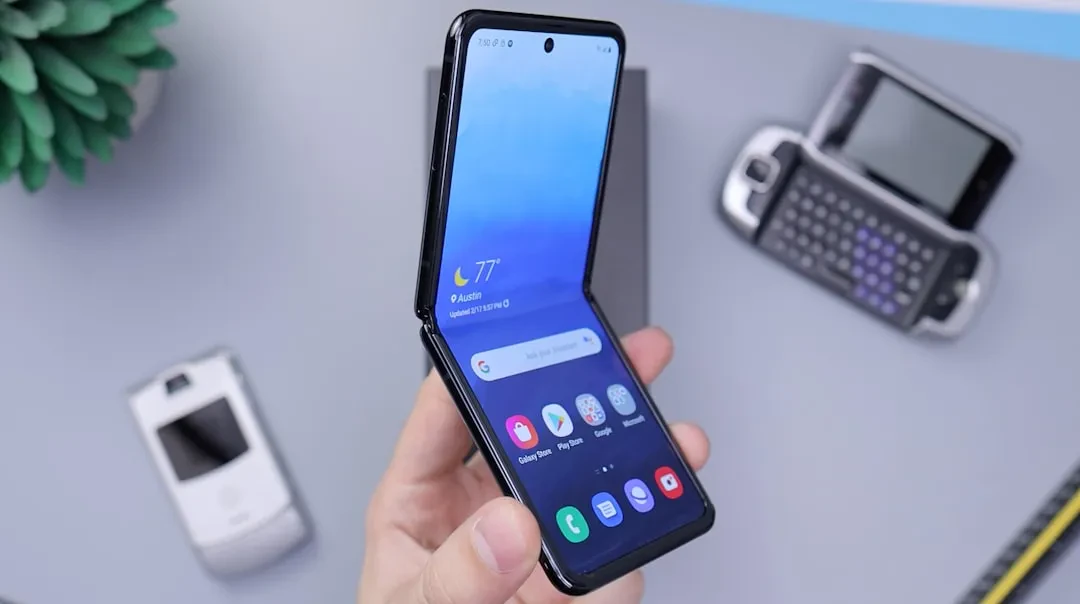
Motorola has stormed into the high-end foldable segment with the Razr Fold, a device that directly challenges Samsung's Galaxy Z Fold 7 and Google's upcoming foldable. The Engadget review highlights a unique selling point: native stylus support, a feature that Samsung dropped on its latest model. This detail could make a difference for professional and creative users who want a foldable tablet for note-taking and drawing without buying extra accessories. The Razr Fold enters a landscape where competition on foldable displays increasingly hinges on technical specs and software ecosystem. Unsurprisingly, as we explored in our article on the AI hardware race with chips and smart glasses, hardware is becoming the true battleground for tech giants.
The OLED iPad Mini and the A19 Pro chip
In parallel, Apple is preparing a major update for the iPad Mini, which could launch in the second half of 2026. According to leaks gathered by MacRumors, the new model (tentatively iPad Mini 8) will replace the LCD panel with an OLED display, possibly increasing size from 8.3 to 8.7 inches. OLED technology delivers deeper blacks, more accurate colors, and superior contrast, bringing the mini tablet closer to the visual quality of flagship iPhones. The device will be powered by the A19 Pro chip, the same that debuted in the iPhone Air and iPhone 17 Pro. Built on a third-generation 3-nanometer process (N3P), the A19 Pro features a 16-core Neural Engine, an advanced GPU with larger cache, and up to 3x the peak GPU compute of the previous generation. Apple aims to make the iPad Mini a true powerhouse, suitable for both gaming and creative tasks. All this comes in a more water-resistant chassis, thanks to a new vibration-based speaker system that eliminates traditional holes. The price could rise by about $100 from the current $499, positioning it as a premium product. For a broader view of Cupertino's strategy, check our analysis on Apple's privacy stance, curved iPhone roadmap, and Maps ads.
Quick Share: Google breaks down barriers between Android and iOS
Finally, Google has announced a significant expansion of its Quick Share system, designed to simplify file sharing between Android and iPhone. Until now, the feature was compatible with AirDrop only on select devices, but starting in 2026, support will arrive on Samsung, OPPO, OnePlus, Vivo, Xiaomi, and HONOR. For Android devices not compatible with AirDrop, Quick Share generates a QR code to share content via cloud with iOS devices. The rollout has begun and will be complete within the next month. Moreover, Google worked with Apple to simplify switching from iPhone to Android, as required by the European Digital Markets Act. The transfer will include eSIM, passwords, photos, messages, apps, contacts, and Home Screen layout, all wirelessly. This move marks a crucial step toward a less closed ecosystem, bridging one of the main barriers to Android adoption for iPhone users. Interoperability thus becomes a central theme, as also highlighted in discussions on platform regulation.
In summary, 2026 is shaping up to be a pivot year for mobile: foldables find new identities with stylus support, tablets aim for OLED screens and ever more powerful chips, while cross-platform connectivity finally becomes a concrete reality. For further technical background, refer to Wikipedia pages on foldable smartphones and OLED technology.
Sponsored Protocol